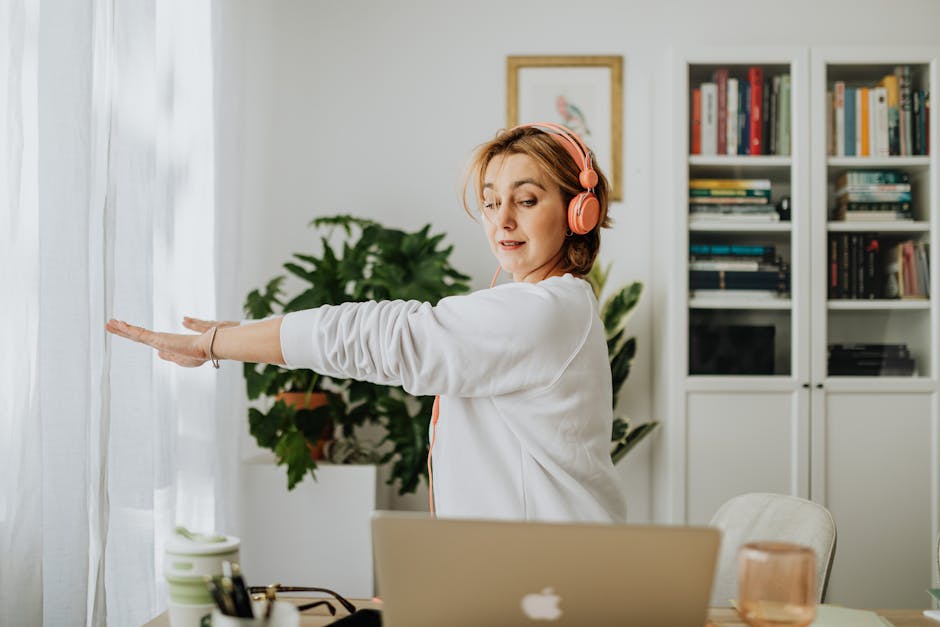

Why “snackable mobility” is trending (and why it actually works)
We’re all living in the age of the chair: desk chair, car seat, couch. And while “just work out more” is the classic advice, there’s a newer, more realistic approach catching on: snackable mobility—tiny movement “snacks” sprinkled through your day that keep your joints moving and your posture from turning into a question mark.
Think of it like brushing your teeth: you don’t do it once a week for an hour and call it good. You do it consistently in small doses. Movement can be like that too.
This roundup pulls together practical micro-routines, simple tests, and real-world examples you can steal immediately—no equipment required. Most take 30–90 seconds. Stack a few and you’re still done in under five minutes.
The big idea: small moves, high frequency
If you sit for long stretches, the main issues tend to be predictable:
- Hip flexors get cranky and tight-ish
- Upper back gets stiff (hello, rounded shoulders)
- Ankles lose range of motion
- Neck starts doing weird compensation things
Movement snacks help because they interrupt prolonged stillness and nudge your body back toward the positions you actually want. Research consistently supports breaking up sedentary time with activity—even light movement—because sitting for long periods is associated with negative health outcomes. If you want an authoritative hub for evidence-based health info and ongoing research initiatives, browse NIH health research resources.
How to use this roundup (without overthinking it)
Pick one of the routines below and attach it to something you already do:
- Every coffee refill
- After every Zoom call
- Whenever you send an email
- Every time you use the bathroom
The goal isn’t perfection. It’s frequency. Two minutes, five times a day beats one heroic 20-minute stretch session you never repeat.
Roundup #1: The Desk Reset (3 minutes)
For the classic “I’ve been glued to my laptop” posture.
- 1) Seated tall + long exhale (30 seconds)
Sit tall, ribs stacked over pelvis. Exhale slowly like you’re fogging a mirror (quietly). Feel your shoulders drop. - 2) Shoulder blade “back pockets” (30 seconds)
Gently pull shoulder blades down and back (not a military squeeze). Hold 2 seconds, relax. Repeat 8–10 times. - 3) Thoracic chair opener (60 seconds)
Sit tall, interlace fingers behind your head, elbows wide. Lean back over the top of the chair (upper back only). Take 4–5 slow breaths. - 4) Wrist + forearm floss (60 seconds)
Arms straight in front, palms down. Make slow fists, then open fingers wide. Add gentle wrist circles. This is gold if you type all day.
Real-world example: A lot of remote workers report that their “neck pain” improves when they stop trying to stretch the neck and instead free up the upper back and shoulders. This reset does exactly that.
Roundup #2: The Hip Flexor Peace Treaty (2 minutes)
For when your hips feel like they’ve been folded into a suitcase.
- 1) Half-kneeling hip flexor stretch (60 seconds total)
One knee down, other foot forward. Tuck pelvis slightly (think “zip up your jeans”). Shift forward gently. 30 seconds each side. - 2) Glute squeeze + reach (30 seconds)
Stand tall, squeeze glutes for 3 seconds, relax. Add both arms overhead as you squeeze. Repeat 6 times. - 3) Hip hinge rehearsal (30 seconds)
Hands on hips, push hips back like closing a car door with your butt. Keep spine long. 8 slow reps.
Actionable tip: If the half-kneeling position bothers your knee, do it standing: step one foot back, bend front knee, keep back leg straight, and do the same pelvis tuck.
Roundup #3: The Ankle-to-Knee Chain (4 minutes)
Stiff ankles can show up as cranky knees or a “heavy” squat pattern. This mini-sequence is surprisingly powerful.
- 1) Wall ankle rocks (90 seconds)
Face a wall. Place toes ~2–4 inches away. Keep heel down, knee travels toward wall. 10 reps each side. - 2) Calf raise with slow lower (60 seconds)
Rise up, take 3 seconds to lower. 8–10 reps. - 3) Tibialis raises (60 seconds)
Back against wall, feet a bit forward. Lift toes toward shins. 12–15 reps. - 4) Knee circles (30 seconds)
Hands on knees, soft bend. Small circles both directions. Keep it gentle.
Data point you can use: If you can’t get your knee to the wall without the heel popping up from ~3 inches away, ankle mobility is likely a bottleneck. Track it once a week—tiny improvements add up.
Roundup #4: The Neck Doesn’t Need Stretching (It Needs Support) (3 minutes)
Hot take: aggressively stretching your neck can feel good for five minutes and then come right back. Often, the better play is strengthening the “support crew” and giving your eyes and upper back a break.
- 1) Chin nods (60 seconds)
Imagine making a double chin without tilting your head down. Hold 3 seconds, relax. 8 reps. - 2) Eye-distance reset (30 seconds)
Look 20 feet away for 20 seconds. Blink slowly. (Yes, this is a thing.) - 3) Wall angels (90 seconds)
Back to wall, ribs down, arms in a “goalpost.” Slide arms up and down slowly. 6–8 reps.
Real-world example: If you notice neck tension spikes after phone scrolling, try the chin nods and eye-distance reset right after you put your phone down. It’s like telling your nervous system, “We’re done with that now.”
Roundup #5: The “Meetings-to-Movement” Menu (pick 2, done in 90 seconds)
Use this when you have back-to-back calls and only a sliver of time.
- 10 bodyweight squats (slow, full-foot contact)
- 10 counter push-ups (hands on desk or counter)
- 20-second supported hang (hold a doorframe and lean back gently)
- 10 lunges (5 per side, short range is fine)
- 30-second march in place (drive knees up, swing arms)
- 8 “good mornings” (hands behind head, hinge at hips)
Actionable tip: Put this list on a sticky note. Decision fatigue is real—if you remove the choice barrier, you’ll do it more often.
Roundup #6: The “I Work Out, But I Still Feel Stiff” Add-Ons (5 minutes)
If you lift, run, cycle, or do classes, you can still feel tight from the rest of your day. These are quick add-ons that don’t mess with your training.
- Breathing squat hold (60 seconds)
Hold a deep squat (heels down if possible). Use a doorframe for balance. Slow breaths. - 90/90 hip switches (90 seconds)
Sit on the floor, knees bent. Rotate both knees side to side. Move slow. - Cat-cow with long exhale (60 seconds)
Make the exhale longer than the inhale. 6–8 cycles. - Side-lying thoracic rotation (90 seconds)
Knees stacked, rotate top arm open. Breathe into ribs. 4–5 per side.
Real-world example: Runners often chase hamstring stretching when the real limiter is hip rotation or upper-back stiffness affecting arm swing. The 90/90 switches and thoracic rotations are a sneaky fix.
Roundup #7: Tiny habit upgrades that make mobility stick
Mobility routines fail for boring reasons: they’re too long, too complicated, or not connected to your life. These upgrades help.
- Set “movement bookmarks”: do 1 minute of something every time you switch tasks.
- Make your environment nudge you: keep a yoga mat visible, not folded in a closet.
- Use a “two-move minimum”: on low-energy days, do any 2 moves from this article. That’s it.
- Track the win, not the workout: write “3 movement snacks” on your calendar instead of “mobility session.”
- Pair with hydration: every glass of water earns you 30–60 seconds of mobility.
Conclusion: Your body loves consistency more than intensity
The best mobility plan isn’t the fanciest one—it’s the one you’ll actually repeat. Snackable mobility works because it meets you where you are: busy, seated, and probably not in the mood for a full routine.
Steal one roundup sequence from this post and run it for a week. If it helps, keep it. If not, swap it. Your joints don’t need a dramatic overhaul; they need frequent, gentle reminders to move the way they were designed to.
Challenge: Set a timer for three movement snacks tomorrow. That’s less than five minutes total—and it might be the best “workout” you do all day.