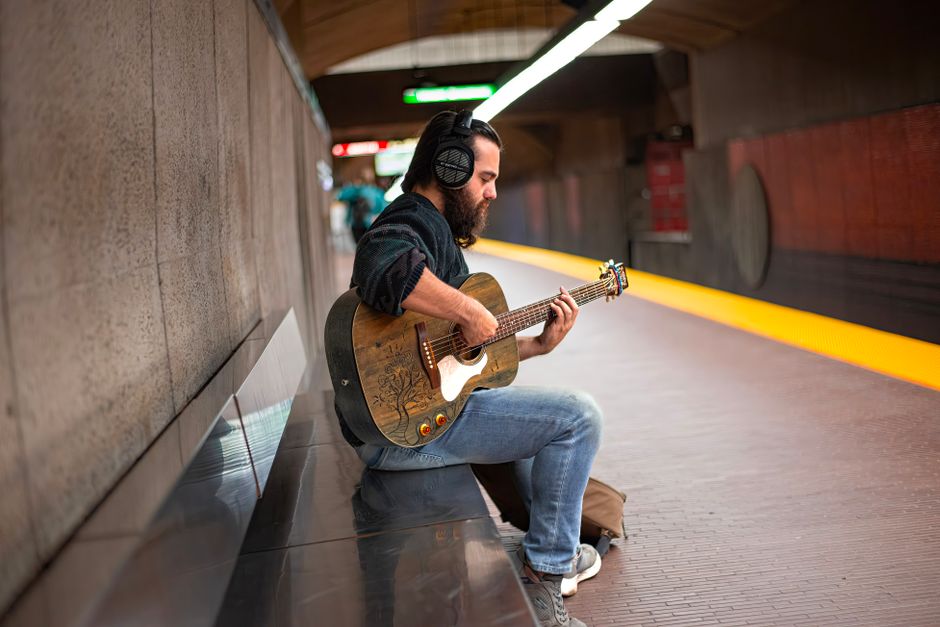

Why a “Commute-to-Stage” ritual is the missing link between music and lifestyle
Most music advice focuses on what you do during practice. Lifestyle advice focuses on sleep, stress, and productivity. But a powerful (and surprisingly underused) crossover is the transition time you already have: your commute, walk, gym warm-up, or the 20–40 minutes before you sit down to play.
A “Commute-to-Stage” ritual is a repeatable sequence that turns everyday movement into a performance-ready mindset. It’s not a generic playlist. It’s a structured routine that primes your body, your ears, and your attention so that when you get to your instrument—or into rehearsal—you’re already in the zone.
Below is a practical, numbered guide you can start today. It’s designed for musicians, producers, DJs, singers, and anyone who wants to feel more grounded while improving musical results with the time they’re already spending.
Step-by-step: How to create your Commute-to-Stage ritual
1) Choose one daily “transition window” and protect it
Pick a consistent slot that happens most days:
- Train/bus commute (15–60 minutes)
- A walk between work and home
- Pre-rehearsal arrival time (20 minutes early)
- Gym warm-up before you produce or practice
Actionable rule: your ritual should happen in the same window at least 4 days a week. Consistency is what trains your brain to associate the sequence with “now I make music.”
Real-world example: If you take the subway 5 days a week, designate the first 10 minutes as “decompression” and the next 10 as “ear training.” Even in a crowded car, the repetition builds an automatic switch into music mode.
2) Define one clear outcome (calm, focus, groove, or confidence)
Don’t aim for everything at once. Choose your primary outcome for the next 14 days:
- Calm: reduce stress and tension before singing/playing
- Focus: reduce scattered attention before production or writing
- Groove: improve timing and feel (great for drummers/bassists/DJs)
- Confidence: performance mindset and stage readiness
This outcome decides what you listen to and what micro-exercises you do.
3) Build a 3-track “anchor sequence” (not a big playlist)
The common mistake is making a 50-song playlist that you keep skipping. Instead, create a 3-track sequence with specific roles:
- Track 1 (Reset): lowers stress and clears mental noise
- Track 2 (Reference): calibrates your ears to a sound you respect
- Track 3 (Activation): adds energy and intention right before you play
Actionable tip: keep the same 3 tracks for two weeks. Familiarity is the feature. It reduces decision fatigue and makes the ritual automatic.
Example for a producer:
- Reset: a minimal ambient track or slow instrumental
- Reference: one mix you admire in your genre (to set tonal expectations)
- Activation: a high-groove track that makes you want to tap subdivisions
4) Decide your listening “mode”: immersive, analytical, or physical
Each track gets a mode. This is where your ritual becomes skill-building instead of passive listening.
- Immersive mode: listen as a fan; notice emotion and imagery
- Analytical mode: focus on one element (kick, vocal, bass movement, reverb)
- Physical mode: tap, step, breathe, or silently conduct
Micro-exercise: On the Reference track, do 60 seconds of analytical listening: identify the loudest element, then the quietest, then the “glue” (often reverb, room, or bus compression feel).
5) Add a 2-minute “ear calibration” to protect your hearing and mixes
You don’t need perfect pitch to calibrate your ears; you need a repeatable check-in. Do this at a moderate volume (protect your hearing):
- 30 seconds: listen for low end (is it tight or boomy?)
- 30 seconds: listen for midrange (vocal/guitar/piano clarity)
- 30 seconds: listen for top end (air, cymbals, sibilance)
- 30 seconds: listen for space (depth, width, front-to-back)
This helps you avoid the classic problem: making production decisions based on whatever mood your ears are in that day.
Helpful resource: If you’re upgrading headphones, interfaces, or monitoring tools to support more consistent listening, browse curated gear guides and comparisons on MusicRadar’s gear reviews and music tech coverage to get a quick reality check on what actually fits your use case and budget.
6) Choose one “single-skill drill” you can do anywhere
Your ritual should include a drill that’s doable without your instrument. Pick one:
- Rhythm: tap quarter notes with your foot while your fingers tap eighth-note or triplet patterns on your leg
- Harmony: sing a simple scale degree pattern (1–3–5–3–1) quietly or in your head
- Lyrics: rewrite one line from memory with a different emotion (anger → relief)
- DJ/producer phrasing: count 16-bar sections and mark transitions mentally
Data point you can use immediately: 10 minutes per day adds up to about 70 minutes per week—over 60 hours per year of extra training—without “finding time” for another practice session.
7) Create a “no-phone drift” rule (so the ritual doesn’t get eaten by scrolling)
The lifestyle side of the ritual matters: attention is your most valuable resource. Set one boundary:
- Use airplane mode for the first 5 minutes of your commute
- Allow only your music app and notes app
- Or: no social apps until Track 3 starts
Practical tip: Put your three tracks in a dedicated playlist named “STAGE MODE” so you’re not tempted to browse.
8) Add a “body check” to reduce tension (especially for singers and instrumentalists)
Technique often collapses because of lifestyle tension—tight shoulders, shallow breathing, clenched jaw. Do a quick scan:
- Drop shoulders on the exhale (3 slow breaths)
- Unclench jaw; tongue rests gently behind upper teeth
- Relax hands (imagine warm water running over fingers)
Example: If you’re a guitarist who shows up with tight forearms from desk work, this 60-second reset can noticeably improve your first 10 minutes of playing—less “warming up,” more making music.
9) Convert one real-life moment into material (capture, don’t create)
To keep the ritual creatively fresh, add a tiny capture habit. You’re not trying to “write a song” on the train; you’re collecting seeds.
- Write one sentence you overheard (dialogue is gold for lyrics)
- Note one visual detail (color, weather, a gesture) and link it to an emotion
- Record a 5-second voice memo: hum a rhythm or melody fragment
Actionable tip: Keep a single note titled “Seeds.” Add one bullet per day. Once a week, review and circle the three most promising ideas.
10) End with a 30-second “arrival cue” that signals: now we play
Performance and practice both benefit from a clear start line. Pick a consistent cue at the end of Track 3:
- Say a short phrase quietly: “One take with intention.”
- Decide the first task before you enter the room: “Vocal warm-up, then chorus rewrite.”
- Touch your instrument case/keyboard stand and take one slow breath
This is behavioral psychology in plain clothes: a repeatable cue reduces procrastination and makes starting feel natural.
Two ready-made ritual templates (copy and customize)
Template A: Producer/Mixer (25 minutes)
- Minutes 1–5: Reset track + airplane mode + shoulder drop breathing
- Minutes 6–12: Reference track in analytical mode (low/mid/high/space scan)
- Minutes 13–20: Activation track in physical mode (tap groove; count 8-bar phrases)
- Minutes 21–25: Notes: write today’s single objective (e.g., “tighten kick/bass relationship”) + arrival cue
Template B: Singer/Instrumentalist (15 minutes)
- Minutes 1–4: Reset track + jaw/neck release + nasal inhale/slow exhale
- Minutes 5–10: Reference track (listen for phrasing and dynamics; mimic silently)
- Minutes 11–14: Activation track (count subdivisions; imagine first song’s tempo)
- Minute 15: Arrival cue: “Easy breath, clear intention.”
Troubleshooting: what to do if it stops working
- If you get bored: keep the same structure but swap only Track 2 (Reference) for one new song in the same style.
- If you feel rushed: shorten it to one track + one drill. Consistency beats duration.
- If you feel overstimulated: replace Track 3 with something mid-tempo and groove-focused rather than aggressive.
- If your mixes vary day-to-day: make Step 5 non-negotiable and keep volume moderate; your ears fatigue faster than you think.
Conclusion: turn dead time into a daily advantage
A Commute-to-Stage ritual is a practical bridge between lifestyle and musicianship. It builds focus, reduces stress, trains your ears, and gathers creative material—without demanding extra hours. Start with one transition window, a three-track sequence, and a single drill. Do it for 14 days, adjust one variable, and repeat.
Your goal isn’t to be “inspired” every day. Your goal is to arrive ready—calm body, tuned ears, clear intention—so the music has a place to land.