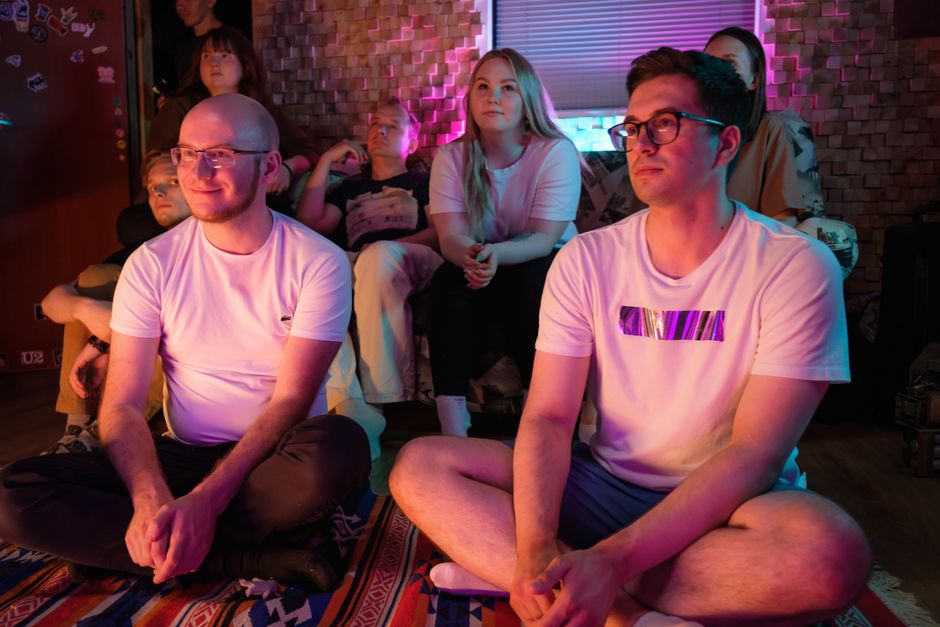

Your living room can host the best show of the month
Going out is fun, but it’s not always realistic: tickets sell out, drinks are pricey, and your group chat can’t pick a date to save its life. A “micro‑festival” is the sweet spot—an at‑home event that feels like a curated festival day, just smaller, cheaper, and more personal. Think: a short lineup, a vibe-forward schedule, intentional lighting, a tiny “merch table,” and a soundtrack that actually flows instead of random playlists on shuffle.
This guide walks you through building a micro‑festival night that’s creative and specific—more like a mini cultural event than “people hanging out with Spotify on.”
Step 1) Pick a micro‑theme that’s weirdly specific (and therefore memorable)
Generic themes (“90s night,” “EDM night”) are fine, but micro‑festivals feel special when the theme is oddly precise. Your theme should answer: What kind of night is this? and What do we want people to feel?
- “Neon Rain: Night Drives + Synth Pop” (cool, cinematic, low lights)
- “Kitchen Disco: Funk + New Wave while cooking together” (high energy, interactive)
- “Indie Afterglow: New releases + gentle comedown” (cozy, discovery-focused)
- “Bass & Board Games” (up-tempo but not chaotic, easy conversation)
Actionable tip: Write your theme as a one-line festival poster tagline. If it sounds like a flyer you’d click, you’re good.
Step 2) Set the format: a 2–4 hour “festival block” with a real run of show
Festivals feel good because you’re not deciding what’s next every five minutes. Build a simple schedule with natural energy waves. A solid at-home micro‑festival typically runs 2–4 hours and has 3–5 “sets.”
Example run of show (3 hours)
- 0:00–0:30 Doors/arrivals + “opening act” (low-volume groove)
- 0:30–1:15 Set 1 (energy lift)
- 1:15–1:30 Intermission (snack + reset)
- 1:30–2:15 Set 2 (peak)
- 2:15–3:00 Closing set (warm landing)
Actionable tip: Use a timer. It sounds intense, but a simple timer prevents the night from turning into “one more song” until it’s 2 a.m. and everyone’s hungry.
Step 3) Build a “lineup” like a curator, not an algorithm
Your lineup is the secret sauce. Instead of one massive playlist, create separate mini-playlists (or queues) for each set. You’re aiming for transitions that feel intentional: tempo changes that make sense, keys that don’t clash too hard, and lyrical mood that matches the moment.
- Opening act: 90–110 BPM, friendly, minimal vocals
- Lift set: 110–125 BPM, recognizable hooks, brighter tones
- Peak set: 120–135 BPM (or your genre’s “peak”), bangers only
- Closing set: drop 10–20 BPM, warmer tracks, space to talk
Real-world example: If your theme is “Night Drives + Synth,” start with mellow electronic (think shimmering pads), lift into punchier retro pop, hit peak with high-energy synthwave, and close with dreamy downtempo.
Actionable tip: Limit each set to 10–14 tracks. That usually lands you in the 35–60 minute range depending on genre.
Step 4) Use one trusted music authority to discover new tracks (without doom-scrolling)
Discovery can spiral into endless tabs. Give yourself one source and a time limit. If you want a steady stream of new music and thoughtful reviews, scan recent best-of lists or album reviews on Pitchfork’s music coverage and pick 3–5 tracks you’ve never played for your group. That small dose of “new” makes your night feel curated instead of predictable.
Actionable tip: Choose “one new track per set.” It’s enough to spark conversation without turning the night into homework.
Step 5) Design the room like a venue (without buying a bunch of stuff)
Micro‑festivals feel different when the room has zones and purpose. You’re not redecorating; you’re directing flow.
- Stage zone: where speakers point (keep it uncluttered)
- Hang zone: comfy seating off-axis so talking is easier
- Hydration zone: water front-and-center (people actually drink it if it’s visible)
- Merch zone: a tiny table with stickers, wristbands, or a guestbook
Actionable tip: Angle your speakers slightly inward to create a “sweet spot” in the middle. If you have bookshelf speakers, place them at ear height (stack on stable books/boxes if needed).
Step 6) Lock in festival-grade lighting with three simple layers
Lighting is the cheat code for vibe. You don’t need expensive gear—just intention. Aim for three layers:
- Base: warm lamp light (avoid harsh ceiling lights)
- Accent: LEDs behind a couch/TV stand, or a single colored bulb in a corner
- Movement: a cheap rotating party light, a phone flashlight behind a glass bottle, or even candle flicker (safely)
Real-world tip: If you can, set lights slightly dimmer during the opening act, brighter at peak, then warmer/dimmer for the closing set. The night will feel like it has chapters.
Step 7) Build a tiny “festival menu” that matches the soundtrack
Food is part of lifestyle, and it anchors memory. Keep it simple and on-theme—one signature drink (boozy or not) plus one signature snack.
- Night Drives + Synth: sparkling citrus mocktail + salty popcorn bar (chili-lime, rosemary, classic)
- Kitchen Disco: make-your-own tacos + disco punch bowl
- Indie Afterglow: charcuterie board + iced tea/aperitif spritz
Actionable tip: Put snacks out at intermission. That’s your “set break” ritual and it keeps people from munching through the quiet opening.
Step 8) Add one interactive moment that isn’t cringe
The best micro‑festivals have a “this is why we remember this night” element. Keep it low-pressure, opt-in, and fast.
- Wristband vote: give everyone two paper wristbands—one to “vote” for the closer, one for “encore”
- Setlist confessional: a note card where guests anonymously write a song that changed their life; read 3 during intermission
- Merch table guestbook: everyone signs and writes their favorite moment of the night
- Two-track rule: each guest can submit exactly two tracks before the event; you weave them into sets
Actionable tip: Don’t do open-queue requests. That’s how you go from “curated festival” to “someone plays a meme song and the vibe collapses.”
Step 9) Make the audio feel good at conversation volume
A common fail: people blast music so loud that nobody can connect. Festivals are loud, yes—but your micro‑festival is also a hang. Your goal is “immersive but talkable.”
- Place speakers right: away from corners if possible (corners exaggerate bass)
- Use a reference track: pick one song you know well, set volume once, then don’t chase it all night
- EQ gently: if voices feel buried, reduce low frequencies a bit instead of increasing volume
Data point (practical): Many phones can measure approximate sound level with a decibel meter app. If you’re consistently above the mid‑80 dB range indoors, conversation gets tough and fatigue goes up fast. Keep it comfortable so people last through the closing set.
Step 10) End like a pro: closing ritual + post-festival recap
Festivals don’t just stop—they land. Give your night a real ending so it feels complete.
- Last song tradition: pick one closing track that always plays at the end of your micro‑festival nights
- House lights up: brighten the room slightly at the end—signals “wrap-up” without awkwardness
- Send the recap: next day, share the setlists and 3 standout moments in the group chat
Actionable tip: Create a “Festival Archive” playlist where you drop the best tracks from each event. Over time, you’ll build a soundtrack of your friendships and eras.
Conclusion: the lifestyle upgrade you can repeat monthly
A micro‑festival night is a small commitment with a big payoff: better music discovery, better hangouts, and a vibe that feels intentional rather than accidental. Keep it simple: a specific theme, a real run of show, a curated lineup, and one interactive moment. Do it once and you’ll start noticing something: your friends won’t ask “what should we do?” anymore—they’ll ask “when’s the next one?”
If you want to level up even further, rotate “guest curators” each month so everyone gets a turn shaping the lineup. Same room, totally new world every time.