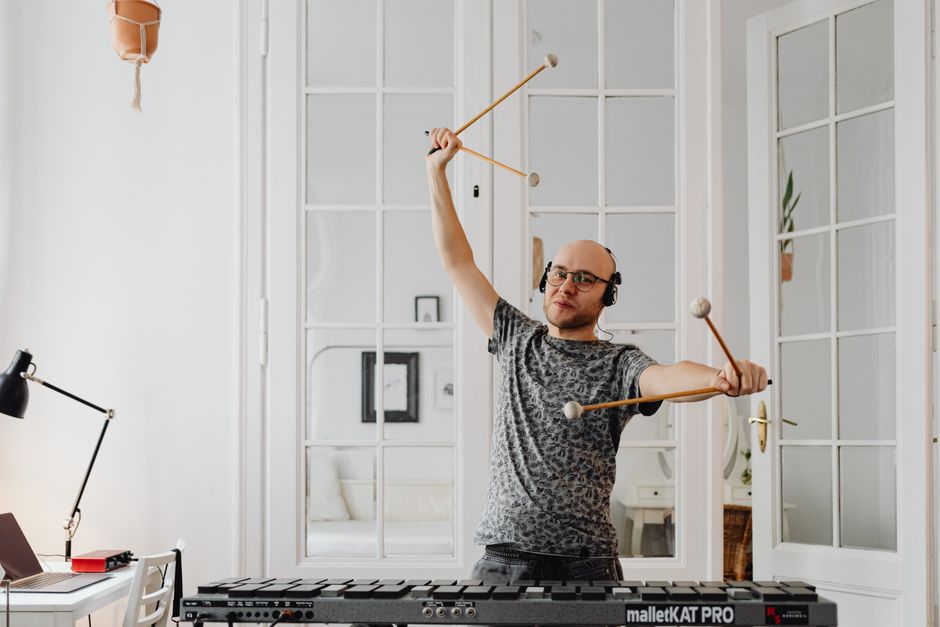

Why micro-rehearsals are trending (and why they work)
Musicians are increasingly borrowing a concept from fitness and productivity: micro-sessions. Instead of waiting for a perfect two-hour block, they stack tiny, focused “micro-rehearsals” throughout the week—often 5 to 20 minutes each. The lifestyle shift isn’t about practicing less; it’s about practicing with higher signal-to-noise and building consistency into real life: commuting, lunch breaks, soundchecks, between meetings, even while cooking.
What makes micro-rehearsals so effective is the compound effect. A 12-minute session, five days a week, is an hour. Two micro-sessions a day can quietly become 10+ hours a month—without the mental drag of marathon practice. It’s also easier to maintain a habit when the “start cost” is low. Below is a roundup of practical micro-rehearsal habits, tools, and routines that fit into modern schedules while measurably improving timing, tone, creativity, and performance readiness.
Roundup: 13 micro-rehearsal habits that actually translate to better gigs
1) The 6-minute “timing audit” (metronome + one idea)
Goal: Improve feel quickly, not just speed. Set a metronome and pick one riff, groove, or chord pattern. Play it for 60–90 seconds. Then do it again with one constraint:
- Accents on 2 and 4 only
- Metronome on half-time (click on 2 and 4)
- Metronome only on beat 1
- Random dropouts (mute the click every other bar if your app allows)
Actionable tip: Record a voice memo from across the room. If the groove “leans” ahead or behind the click consistently, that’s your timing fingerprint. Fixing it in short bursts is often more effective than a long session where your ears stop noticing.
2) The “one-bar microscope” for difficult passages
Goal: Stop looping the whole section when only one bar is broken. Take the hardest single bar, slow it down, and repeat it 12 times perfectly. Then connect it to the bar before and after—only after the isolated bar feels automatic.
Real-world example: Players often grind through an entire 8-bar solo when the real issue is a single string crossing or position shift. Fixing the micro-problem reduces total practice time dramatically.
3) A 10-minute “tone snapshot” before you touch a knob
Goal: Make your sound consistent from room to room. Before changing EQ, take a quick baseline snapshot:
- Play the same phrase at three dynamics: whisper, medium, loud
- Walk 10–15 feet away (or listen through headphones if silent practicing)
- Note what disappears: lows, pick attack, vocal midrange, sustain
Actionable tip: Keep a tiny note in your phone called “My default tone.” Write down your “known good” starting points (amp channel, gain range, pedal order). It prevents tone-chasing spirals right before rehearsal.
4) The “setlist cardio” method: run transitions, not songs
Goal: Make live sets feel effortless. Instead of playing entire songs, rehearse only the transitions:
- Last chorus of Song A → count-in → first verse of Song B
- Tempo change moments
- Patch/pedal changes
- Talking points and cue lines
Why it’s high-impact: Transitions are where shows lose energy. Tight transitions make an average band feel professional.
5) The “lyrics while walking” recall drill
Goal: Get off lyric sheets. While walking (no instrument), recite lyrics and mark problem lines. Then drill only those lines, not the whole song.
Actionable tip: Use a “first-letter prompt” in your notes (e.g., “W r t n…”). This trains recall without reading full lines. It’s similar to memory athletes using cues rather than full scripts.
6) A 7-minute rhythm vocabulary builder (clap + count + speak)
Goal: Improve rhythmic confidence without an instrument. Choose one rhythm (e.g., dotted eighth + sixteenth, or syncopated 16ths). Do three passes:
- Clap it while counting subdivisions (“1e&a”)
- Speak it using syllables (ta-ka, doo-ga—whatever is consistent for you)
- Clap it against a metronome with the click on 2 and 4
Why it works: Your hands and voice expose timing errors faster than your “muscle memory” on an instrument.
7) Two minutes of “stage voice” (even if you’re not a singer)
Goal: Sound confident between songs. Practice two things:
- One clear band intro
- One short story or context line for a song (10–15 seconds)
Real-world example: Many instrumentalists freeze when the mic comes up. A rehearsed, simple script improves crowd connection immediately and reduces awkward dead air.
8) The “silent practice rig” checklist for apartment-friendly consistency
Goal: Remove friction so you practice more often. Your micro-rehearsal kit should be “grab-and-go”:
- Headphones you actually like wearing for 15 minutes
- A compact interface or headphone amp
- One dependable cable + one spare
- A phone stand (so you’re not hunched over)
Resource tip: If you’re comparing home-practice gear, the reviews and roundups at MusicRadar are useful for narrowing down options based on real-world use rather than specs alone.
9) The “two-take recording rule” (and stop)
Goal: Build performance readiness without spiraling into perfectionism. Pick a section and record two full takes only. Then stop and evaluate:
- Was timing steady?
- Did dynamics match the intention?
- Were there repeat mistakes (same spot both takes)?
Actionable tip: If the same mistake happens twice, that’s not “bad luck”—it’s a target for tomorrow’s micro-session.
10) A 12-minute “repertoire rotation” system (the 3–2–1 method)
Goal: Keep more songs gig-ready with less total time. Divide the micro-session:
- 3 minutes: One song you’ll play this week (high priority)
- 2 minutes: One song you haven’t played in a month (maintenance)
- 1 minute: One “wild card” (new idea, new genre, or a tricky technique)
Repeat the cycle twice for a 12-minute session. This keeps your catalog alive and reduces the “I forgot everything” feeling before a call.
11) The “hands-free ear training” habit (intervals in daily life)
Goal: Improve melodic accuracy and harmony instincts. Pick one interval per day (minor third, perfect fifth, etc.). Associate it with a song you know. Throughout the day, hum the interval from random starting notes (car horn pitch, microwave beep, your own speaking voice).
Data point you can track: At the end of the week, test yourself: can you reliably sing the interval without an instrument? If yes, you’ve built a practical skill that shows up immediately in vocal harmonies and improvisation.
12) The 5-minute “gig bag reset” (a lifestyle habit with huge payoff)
Goal: Prevent rehearsal and gig chaos. Once a week, do a reset:
- Coil cables properly, discard dead batteries
- Restock picks, strings, reeds, sticks, gaffer tape
- Confirm you have a charger for your tablet/phone
- Put your setlist/notes in the same pocket every time
Why this matters: Most “bad gigs” are not musical—they’re logistical. This micro-habit protects your headspace and your professionalism.
13) The “sleep-to-skill” routine: stop practicing 30 minutes earlier
Goal: Convert practice into lasting improvement. End your day with a short review (what improved, what needs work), then sleep. Many musicians notice that a passage feels easier the next day even with less total practice time.
Actionable tip: Before bed, write the single most important micro-target for tomorrow (e.g., “clean shift into bar 17 at 60 bpm”). This reduces decision fatigue and makes your next session automatic.
How to build your weekly micro-rehearsal plan (a simple template)
If you want structure without turning music into homework, try this repeatable schedule. Each day is 10–20 minutes total, split into two micro-sessions if needed.
- Mon: Timing audit + one-bar microscope
- Tue: Repertoire rotation + two-take recording rule
- Wed: Rhythm vocabulary + lyrics while walking
- Thu: Tone snapshot + transition run-throughs
- Fri: Ear training + stage voice
- Sat (optional): Full run of 3 songs for fun
- Sun: Gig bag reset + plan next week’s micro-targets
Key principle: Keep at least 70% of micro-sessions “performance-adjacent” (timing, transitions, recording, recall). That’s what makes the improvement obvious on stage, not just in the practice room.
Common mistakes to avoid
- Turning every micro-session into warm-ups: Warm-ups have value, but don’t let them consume the entire window. Warm up for 60–90 seconds, then do the real task.
- Changing too many variables at once: New pick + new strings + new amp settings + new technique = no clear feedback. Change one thing per session.
- Measuring progress by “hours” instead of outcomes: Track results: clean take at a certain tempo, memorized verse, tighter transition.
- Practicing only what you’re good at: Micro-rehearsals shine when you target weak links in tiny doses—without the dread.
Conclusion: the lifestyle upgrade is consistency, not intensity
Micro-rehearsals aren’t a shortcut; they’re a strategy for modern life. By designing 5–20 minute sessions with clear constraints—timing audits, one-bar fixes, transition drills, two-take recordings—you build the kind of reliable musicianship that shows up at rehearsals and gigs. The best part is psychological: you stop waiting for perfect conditions and start collecting small wins that compound into noticeable growth.
If you adopt even three of the habits above and repeat them weekly for a month, you’ll likely feel tighter, more prepared, and less stressed—without adding hours to your calendar.