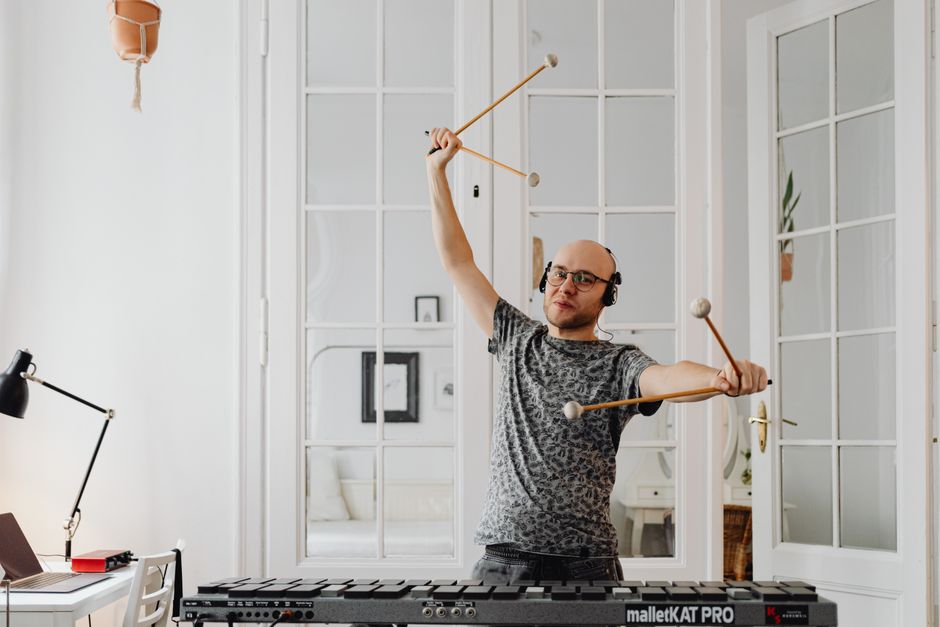

Why “micro-ritual” playlists are trending in music & lifestyle
Most playlists are built for vibe. A micro-ritual playlist is built for behavior. It’s a short, repeatable sequence of songs (usually 12–25 minutes) that you use as a trigger to enter a specific state: focused practice, deep work, songwriting, or post-gig recovery. Think of it like brushing your teeth—same cue, same routine, same outcome—except your cue is a very intentional run of tracks.
This approach has become popular because it fits modern schedules: you can get meaningful progress in short sessions, and music provides a powerful context cue. Instead of relying on motivation, you build a reliable on-ramp into practice mode.
Below is a step-by-step system to create a micro-ritual practice playlist and run it for 14 days, with clear metrics so you can prove whether it’s working.
Step-by-step: Build your 14-day micro-ritual practice playlist
1) Pick one “practice outcome” (not a genre)
Start with a single, measurable outcome. “Get better at guitar” is too broad. Choose something you can verify in two weeks.
- Instrument outcome: Increase clean alternate-picking tempo from 120 BPM to 132 BPM (10% gain) for one riff.
- Vocal outcome: Sing a chorus with stable pitch (within ±20 cents) across three takes.
- Producer outcome: Finish two arrangement drafts (intro–verse–chorus–bridge) with rough mix levels.
Actionable tip: Write your outcome as: “In 14 days, I will ___, measured by ___.” You’ll use this to decide what your playlist needs to do: energize you, calm you, or lock you into consistency.
2) Set a strict playlist length (12–25 minutes)
Micro-rituals work because they’re frictionless. If the playlist is 90 minutes, you’ll negotiate with yourself. If it’s 18 minutes, you’ll press play.
- 12–15 minutes: Great for daily technique and busy schedules.
- 18–22 minutes: Ideal if you need a longer warm-up phase.
- 25 minutes max: Useful for songwriting/production where you need time to “drop in.”
Data point you can use: A 15–25 minute window aligns well with common focus rhythms and is short enough to repeat daily without burnout. Your goal is consistency, not heroic sessions.
3) Design the playlist in four phases (with specific job descriptions)
Instead of picking songs randomly, assign each track a role. This is where the “ritual” part comes in.
- Track 1: The Doorway (1–3 min) — A consistent opener that signals “practice starts now.” Keep it the same for 14 days.
- Track 2: The Warm-Up Engine (3–6 min) — Medium energy, steady groove. You should feel your body settle into motion.
- Track 3: The Focus Lock (4–8 min) — Low lyrical distraction, predictable structure, minimal surprises. This is where the real work happens.
- Track 4: The Finish Line (2–5 min) — A closer that cues completion and makes you want to come back tomorrow.
Practical note: Lyrics can be helpful for mood but can reduce precision for tasks like sight-reading, transcription, or programming drums. If you notice your brain “following the story,” switch Track 3 to instrumental or a song you know so well that it becomes background.
4) Choose your “Doorway” song using a consistency rule
Your Doorway track is the anchor. Pick something you enjoy, but it must be consistent and short enough that you won’t skip it.
- Pick a song that starts cleanly (no 45-second intro you’ll fast-forward).
- Avoid songs with emotional volatility that could derail you (e.g., a breakup anthem if you’re trying to focus).
- Use the same Doorway track every day for 14 days. No exceptions.
Real-world example: If you’re a drummer building timing consistency, a Doorway track with a tight, steady groove (and a tempo you can count easily) works better than a track with frequent tempo shifts. The goal is a cue, not a concert.
5) Build the “Focus Lock” track around tempo and predictability
This is the most important decision. Your Focus Lock track should stabilize your attention and support the type of practice you’re doing.
- For precision tasks (metronome work, scales, editing): Choose tracks with a steady tempo and minimal breakdowns.
- For creativity tasks (songwriting, sound design): Choose tracks that create a consistent emotional palette but don’t demand lyrical attention.
Actionable tip: If you practice to a click, match the Focus Lock tempo to your target BPM range (or a close neighbor). If you’re not sure about tempo, use a BPM app or your DAW’s tempo detection.
6) Use one high-quality reference resource to avoid “bad audio fatigue”
Listening fatigue is real—especially when you replay the same short sequence for two weeks. If your tracks are harsh, overly compressed, or just poorly mastered, you may feel tired faster and blame your motivation.
A practical workaround: pick at least one “known good” track from a trusted gear/audio reference list when building your ritual. Music gear and recording publications often curate recommendations and reference tracks to help listeners evaluate clarity, low end, and dynamics. You can use MusicRadar’s reviews and guides as a starting point to find well-produced music (and gear tips) that won’t punish your ears over repeated listens.
Why this matters: If the sonic quality feels pleasant, you’re more likely to repeat the ritual. Repetition is the whole system.
7) Create an “if-then” rule for when you don’t feel like practicing
The difference between a playlist and a ritual is what you do on low-energy days.
- If you feel resistance, then you only commit to Track 1 + 2 (Doorway + Warm-Up).
- If you complete Track 2, then you automatically start your first drill for 5 minutes.
This is a behavioral trick: you’re lowering the entry cost. In most cases, starting is the hardest part. Once the playlist rolls, momentum takes over.
8) Pair each track with a single, specific action
To make the ritual “automatic,” assign one action per phase. Write these actions in your notes app so there’s no decision-making.
- Track 1 (Doorway): Set up your station (tuner/metronome/DAW template open).
- Track 2 (Warm-Up): Do one warm-up pattern (e.g., chromatic exercise, lip trills, rudiments).
- Track 3 (Focus Lock): Do your primary skill drill with measurement (BPM, takes, or timer).
- Track 4 (Finish Line): Record a 30–60 second “proof clip” or write a 2-sentence log.
Real-world example: A producer’s Track 3 action might be: “Build an 8-bar chorus drop with kick/bass/lead only, then bounce a rough.” A guitarist’s Track 3 action might be: “Play riff clean 5 times at 128 BPM; if 4/5 are clean, increase to 130.”
9) Add a daily measurement that takes under 60 seconds
What gets measured gets repeated. Keep it tiny.
- Tempo metric: Highest clean BPM achieved today.
- Consistency metric: Clean reps out of 5 attempts.
- Creation metric: Number of bars arranged or takes recorded.
- Energy metric: Rate focus 1–5 right after Track 4 ends.
Actionable tip: Use a single note titled “14-Day Micro-Ritual” and add one line per day. Example: “Day 6: 130 BPM clean 4/5; focus 4/5; 1 proof clip.”
10) Run the same playlist for 7 days before making any changes
People sabotage rituals by endlessly tweaking. Give your brain time to associate the sequence with the state you want.
- Days 1–3: You’ll feel novelty or mild irritation. Normal.
- Days 4–7: The cue-response loop starts to form.
- Days 8–14: The ritual should begin to feel like a “shortcut” into practice.
Rule: No changes until Day 8 unless a track is genuinely unpleasant or distracting.
11) On Day 8, swap only one track based on your data
Use your 7-day log to decide what to refine. Change just one variable so you know what helped.
- If focus scores are low: Replace Track 3 with something less lyrical or less dynamic.
- If you can’t start: Replace Track 1 with a more welcoming, shorter cue.
- If you fade early: Replace Track 2 with a track that has a clearer pulse or slightly higher energy.
Example adjustment: If you noticed your BPM gains stalled after Day 5, your Focus Lock track might be too relaxing. Swap it for a steadier, slightly more driving groove and keep everything else identical.
12) Lock in the “Finish Line” so you end before you’re depleted
Most people quit rituals because they end exhausted. Your closer should create a clean stop, not drag you into endless noodling.
- Pick a shorter Track 4 that you enjoy enough to associate with satisfaction.
- End with a tiny win: a recording, a checkbox, a saved project version.
- Stop when Track 4 ends—no bargaining. You can always do a second round later.
Lifestyle benefit: Ending on time protects your schedule and keeps practice from feeling like it “steals” from the rest of your life. That reduces the psychological resistance tomorrow.
What results to expect after 14 days (and how to interpret them)
If you do this daily (even at low intensity), you should see at least one of the following:
- Faster start time: You begin practicing within 2–3 minutes of pressing play.
- Improved consistency: More clean reps out of 5, or fewer “restart” takes.
- Higher output: More finished chunks—riffs tightened, vocals captured, arrangements drafted.
- Lower mental friction: You stop debating and simply follow the sequence.
If you don’t see improvement, it’s usually one of three issues: (1) the playlist is too long, (2) the Focus Lock track is distracting, or (3) your measurement is too vague. Fix one and rerun for another 7 days.
Conclusion: Turn music into a repeatable lifestyle lever
A micro-ritual practice playlist is a simple tool with outsized impact because it converts music from entertainment into a behavioral trigger. By keeping the playlist short, assigning each track a job, logging one tiny metric, and resisting the urge to constantly tweak, you build a reliable gateway into focused practice—no matter how busy life gets.
Commit to 14 days. Keep the Doorway track constant. Measure the outcome you chose. At the end, you won’t just have a playlist—you’ll have a repeatable system you can reuse for touring prep, studio sprints, skill-building phases, or any season where you want progress without chaos.